INVENTION DIARY · ENTRY 02
The most useful early feedback came from how people used, emptied, and cleaned the prototype.
Continued use gave us something to study
Our early testers have continued using SnuffRing and telling us what they notice. That matters to us: a prototype becomes more informative when people work it into their normal routines and encounter the parts that are convenient, awkward, or difficult to clean.
This is still a small, informal testing group. Their experiences help us decide what to investigate next; they are not a controlled comparison or proof of how a finished product will perform.
What users reported
Users reported that covering the material between uses helped interrupt continued burning and made their material last longer. They also reported that the screen retained loose ash and that they cleaned their pipes and changed the water less frequently.
Those reports are encouraging, but we have not established a measured savings percentage, a universal cleaning benefit, or consistent results across different bowls and materials. We are keeping the public description qualitative while we develop more structured tests.
Loading and emptying became part of the design discussion
Testers found that loading only the amount intended for a single use made the process more predictable. They also described inverting the device and lightly tapping the bottom of the screen after the material was finished to clear loose ash.
One tester reported less residue buildup when emptying the screen after each use, and another began trying the same routine. Earlier feedback had identified residue accumulating beneath the screen. Together, these observations make access and cleanability important engineering questions.
These are observations about prototype use, not final cleaning instructions. Any handling or emptying must wait until the contents are fully extinguished and the device is cool.
What this changes for engineering
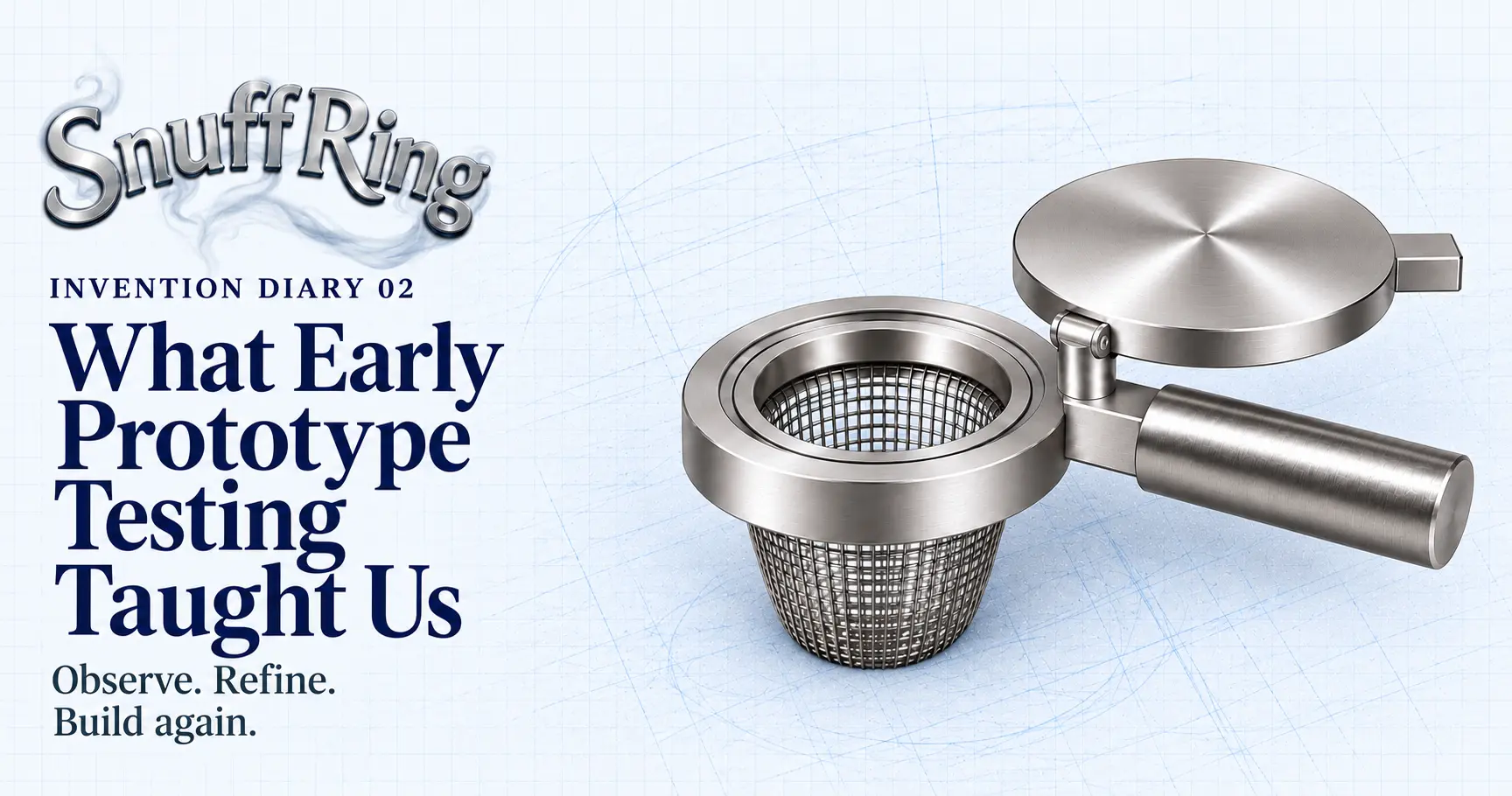
We are using the feedback to focus attention on access to the screen, removal and cleaning of components, lid operation, fit, and handling. Detailed implementation is still being reviewed, so we are sharing the questions rather than publishing every design revision.
The next physical versions should help us evaluate repeatability: whether the same actions produce similar results across repeated uses and defined conditions.
What we still need to learn
Structured testing will need to address fit, snuffing behavior, heat transfer, ash retention, cleaning, and durability. We also want to keep recording what users do without prompting, because an inconvenient maintenance step may be ignored even if it works in a demonstration.
The lesson so far is that feedback concerns both the accessory and the routine around it. We need to develop them together.
Next in the series: Why We Filed Before Publishing: The SnuffRing PCT Application.
Follow the build
Subscribe here for new diary entries, prototype progress, and launch updates.
You can unsubscribe at any time. Read our Privacy Policy.
These are informal prototype observations, not verified performance or safety claims. Final materials, features, compatibility, and instructions may change. Closing the lid does not guarantee complete extinguishment or that the device is cool.
Leave a Reply